Choosing a venue for a corporate event or meeting can be a daunting task. There are many factors to consider, such as the size, location, budget, amenities, and atmosphere of the venue. Here are some tips to help you find the perfect place for your next business gathering.
- Start planning early. The sooner you start looking for a venue, the more options you will have. You will also have more time to negotiate prices, book catering, and arrange transportation. Ideally, you should start your search at least six months before the event date.
- Know your audience. Think about who will be attending your event and what their needs and preferences are. For example, if you are hosting a training session, you might want a venue that has a projector, a sound system, and comfortable seating. If you are organizing a networking event, you might prefer a venue that has a bar, a lounge area, and a relaxed vibe.
- Set a budget. Before you start contacting venues, you should have a clear idea of how much you can afford to spend. This will help you narrow down your choices and avoid overspending. You should also factor in the costs of catering, entertainment, transportation, and other services that the venue might offer or require.
- Compare venues. Once you have a shortlist of potential venues, you should visit them in person or virtually to get a feel for the space and the service. You should also ask for quotes and contracts from each venue and compare them carefully. Look for hidden fees, cancellation policies, and extra charges that might affect your final bill.
- Choose a venue that matches your brand and goals. Finally, you should choose a venue that reflects your company’s image and values and aligns with the purpose and theme of your event. For example, if you want to showcase your creativity and innovation, you might opt for a modern and stylish venue. If you want to foster collaboration and teamwork, you might choose a venue that has breakout rooms and interactive activities.
What’s included
When you approach a venue to get pricing, discuss the details of the event and the activities you expect to provide to get a clear picture of all possible costs and fees. Ask what is included in the venue fee. Are service and taxes included? Is there a set-up or break down fee? Are there fees for linens, tables and chairs? Any food and beverage minimums? Are Wi-Fi and audio visual equipment included or will there be an additional charge? Some venues offer all-inclusive pricing, so make sure you’re comparing apples to apples.
Space and layout
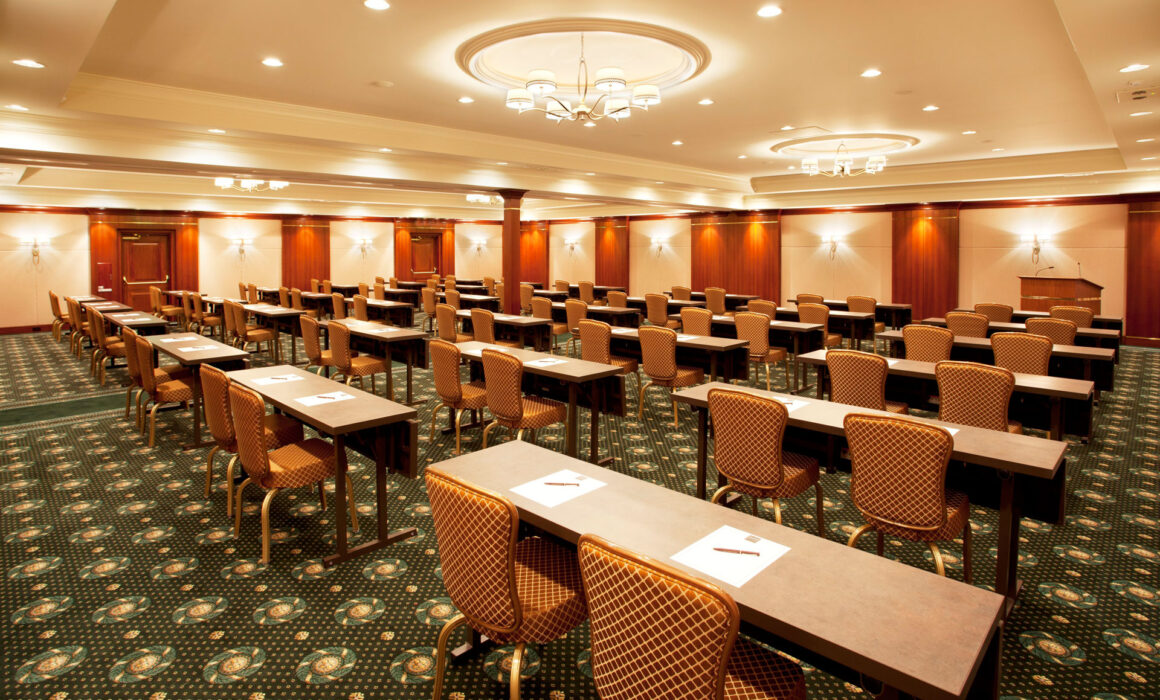
Look carefully at the space to make sure it meets your event needs. Is there a capacity limit? If you need breakout rooms, a stage or a networking area, find out if the facility can accommodate. Often the spaces outside of the main meeting room are not considered fully when appraising a venue, but they are vital to delegate connections! How flexible is the floor space? Can rooms be changed around if needed? You don’t want your conference to seem half empty by renting a room meant for 300 if you have only 50 attendees, so choose spaces with this in mind. Will you have full use of the venue, or will other events be happening?
If you’re looking for outdoor space, be sure to ask if the deck, lawn, garden or patio is available for your use and if they have WiFi! Do sponsors need a separate area, or can they be set up in the networking space? Discuss all of your plans with the venue operator: he or she may have ideas about ways to accommodate your needs that aren’t immediately apparent.
Location, accessibility and parking
If your meeting or event delegates are traveling from out of town, you may want a venue near the airport, train or central transportation. Find out if parking is provided, what any extra costs might be, or if alternative transportation can be arranged. If on-site parking isn’t available, consider reserving nearby parking for attendees, or book transportation such as a shuttle bus, Uber or taxis. For local meetings or events, consider a venue close to your office to encourage attendance (or farther away to create a change of scene).
Services and amenities
Be careful not to assume that all venues offer the same level of service and inclusions, or that all amenities will be available for your event. If you need additional services like special catering (including dietary requests), floral arrangements, pads and pens, audio-visual services, IT support, staging and lighting, decor for event production, ticketing, transportation, or sight seeing tours for the guests, find out what your venue offers or if they have preferred vendors you can work with. Vendors recommended by the venue may have more experience on site, know things like outlet capacity or the best entrances for catering, and can help you avoid missteps.
Atmosphere
The ambiance and décor of a space can set the mood or tone for your meeting. If you need serious decisions made or a polished professional image to be cemented, consider that when selecting your venue. If you’re looking to inspire creativity or engender bonding among your team, consider spaces that easily accommodate hands-on or group activities or give off a fun vibe. If you’re having an award ceremony or gala, choosing an elegant or inspiring space matters. Everything from the style of furniture to lighting to architecture of a space contributes to the atmosphere. But don’t overlook acoustics. Be sure to check outside the space for noise issues or nearby activities that might interfere with your plans.
Food & Beverage
Decide what sort of meals, breaks, snacks or refreshments you will be offering and determine what is included by your venue. Do you need a sit-down meal or buffet-style? Can the venue accommodate special dietary requests such as gluten free, vegan or Halal? Is the food prepared on site, and are fresh ingredients used, or is outside catering needed? If alcohol will be served, is an alcohol license and bartender needed or is it provided? Also find out if a minimum food order is required.
Audiovisual /Tech
Most likely your meeting will have some AV and Wi-Fi needs to accommodate PowerPoint or slide presentations, videos, demonstrations or Internet connections. You may need microphones, projectors, screens or special lighting. Discuss what your venue can provide, what is included in the fee, and what you need to rent from an outside vendor. It is also important to consider staff support on the day, is it a venue staff member or outside AV provider? Ask whether charging stations and Wi-Fi are provided for attendees, and whether tech support is available if people have trouble connecting.
Restrictions
Venues may have restrictions that include, for example, decorating (not hanging anything on walls), photography/videography, alcohol, or outside catering. Outdoor space may not be available for use during certain times, or lawn tents may have restrictions. Be clear on these issues up front so you’re not left scrambling at the last minute.
Lodging accommodations
When planning out-of-town corporate events or inviting teams from other locations, it may be convenient to select a venue that offers overnight lodging, or that is near a suitable hotel. If the venue can’t accommodate all of your guests, arrange for transportation, or let people know if you’ll be covering the cost of taxis.
Branding and signage
Find out what signage and branding opportunities are available throughout the facility for your event or meeting. Which do you need to provide and which are included in your contract? If you need to provide banners or signs to fit in specific holders or frames, be sure to get the sizing and specifications. Make sure you know what other decorating options are allowed, such as balloons, flags, flowers, planters, banners or lights. Ask the venue for ideas and recommendations to make the most of the space.